Seafood Sourcing Insights
8 min read
If you have ever sourced Atlantic salmon during the wrong procurement window and watched your margins collapse, you already understand the core idea behind this article.
Seasonality in seafood is not simply a culinary concept.
It is an operational reality that directly affects:
- seafood sourcing costs
- omega-3 quality
- cold-chain stability
- fish supply chain management
- procurement forecasting
- customer satisfaction
But one nuance often overlooked by buyers is that not all seafood categories are affected equally.
Marine species experience dramatically higher seasonal volatility than freshwater fish.
And for D2C seafood brands, procurement teams, restaurants, and institutional buyers, understanding that difference is becoming increasingly important.
The Global Seafood Market Still Runs on Biology
The global seafood market was valued at nearly USD 387 billion in 2025 and continues expanding rapidly because of rising protein demand, health-focused diets, and increasing seafood consumption worldwide.
Yet beneath the scale of the industry lies a biological reality:
Much of the seafood supply chain still operates according to migration cycles, spawning windows, ocean temperatures, and seasonal fishing restrictions.
Wild-caught seafood still represents more than half of global supply.
This means procurement calendars are ultimately shaped by nature - not software systems.
| Key Market Context | Data |
|---|---|
| Global seafood market (2025) | ~USD 387 Billion |
| Projected CAGR through 2034 | ~7.5% |
| Wild-caught seafood share | 55%+ of global supply |
| Seafood processors affected by seasonal disruptions | ~29% |
| Fishing operations reporting reduced off-season catch | ~33% |
Sources: Fortune Business Insights, Johns Hopkins Center for a Livable Future, Market Growth Reports
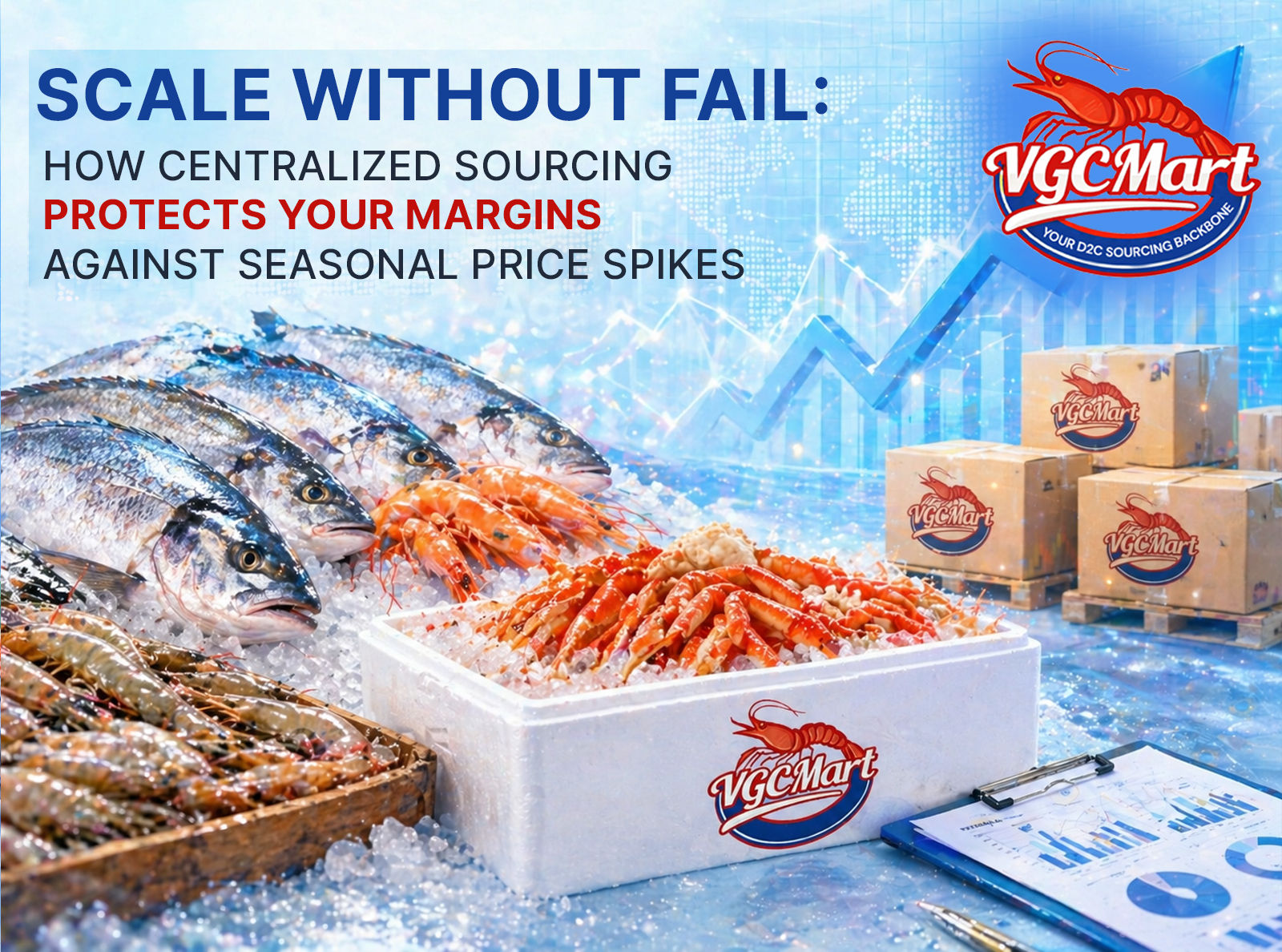
As explored in our article on centralized seafood sourcing and price volatility, businesses that fail to account for seasonal procurement dynamics often experience severe pricing instability during peak-demand windows.
Why Seawater Fish Are Structurally More Seasonal
Marine fish operate within extremely dynamic ecosystems.
Species such as:
- Atlantic salmon
- yellowfin tuna
- pomfret
- sardines
- Indian mackerel
are heavily influenced by:
- migration routes
- ocean currents
- reproductive cycles
- water temperature
- plankton availability
Many commercial marine fishing windows remain surprisingly narrow.
For some species, premium catch quality may only exist for a few weeks annually.
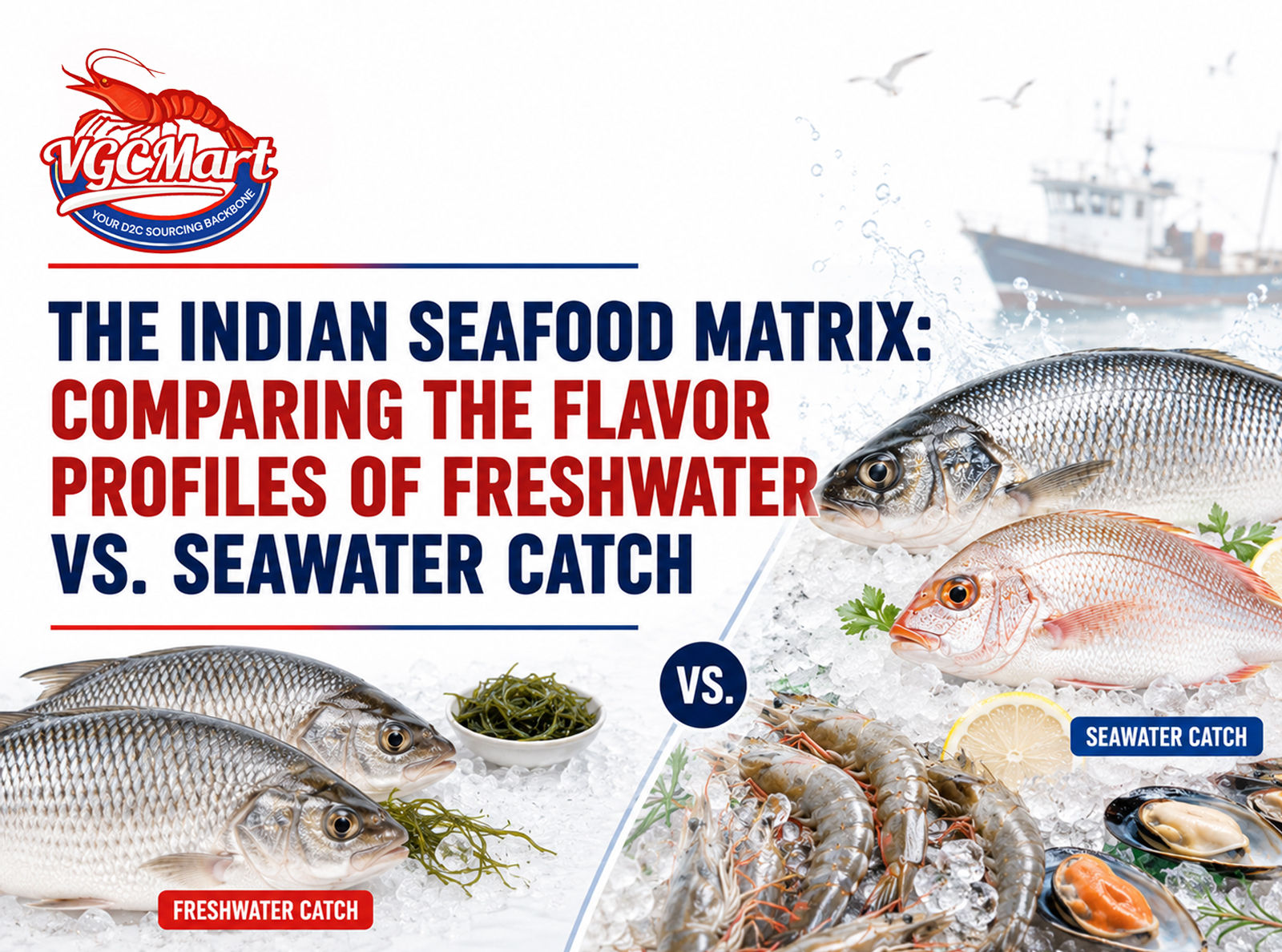
Freshwater species such as Rohu, Catla, Tilapia, and Basa operate very differently because they are largely supported by pond aquaculture and controlled inland farming ecosystems.
This creates significantly greater year-round supply stability.
As discussed in our breakdown of fish supply chain management and first-mile sourcing challenges, sourcing predictability becomes far easier when procurement depends less on wild ocean variability.
Marine Fish Nutritional Quality Changes Across Seasons
One of the most commercially important aspects of seasonality is nutritional fluctuation.
Marine fish accumulate fat before spawning and migration periods.
This is when:
- omega-3 levels peak
- flesh texture improves
- flavour intensifies
- oil content becomes richer
Post-spawning fish often show the opposite characteristics:
- lower fat reserves
- weaker texture
- reduced nutritional density
- softer flesh quality
Research published in Food Chemistry found that marine fish contain substantially higher omega-3 concentrations than most freshwater species.
But within marine categories themselves, omega-3 density also fluctuates significantly depending on season.
| Nutritional Factor | Seawater Fish | Freshwater Fish |
|---|---|---|
| Omega-3 EPA/DHA concentration | Higher overall | Moderate |
| Seasonal omega-3 fluctuation | Very high | Lower |
| Fat accumulation cycles | Strongly seasonal | More stable |
| Flesh texture variability | Significant | Relatively stable |
| Nutritional consistency | Season-dependent | More predictable |
This matters enormously for brands marketing:
- omega-3 rich fish India
- clean protein seafood
- heart-healthy seafood products
- high-protein fish meal kits
Because nutritional claims depend heavily on sourcing timing.
As explained in our article on fish protein and India’s fitness economy, consumers increasingly evaluate seafood based on functional nutrition rather than simple protein quantity.
Regulatory Closures Affect Marine Fisheries More Aggressively
Marine fisheries face far stricter regulatory intervention compared to most freshwater aquaculture systems.
Seasonal bans, quota systems, and stock protection measures can rapidly remove entire species categories from active procurement windows.
This creates major sourcing instability for businesses dependent on:
- tuna
- pomfret
- prawns
- mackerel
- sardines
Freshwater aquaculture systems provide far more supply continuity because production cycles are controlled and scalable.
This is one reason why Rohu and Catla have become increasingly attractive for food manufacturers and institutional buyers.
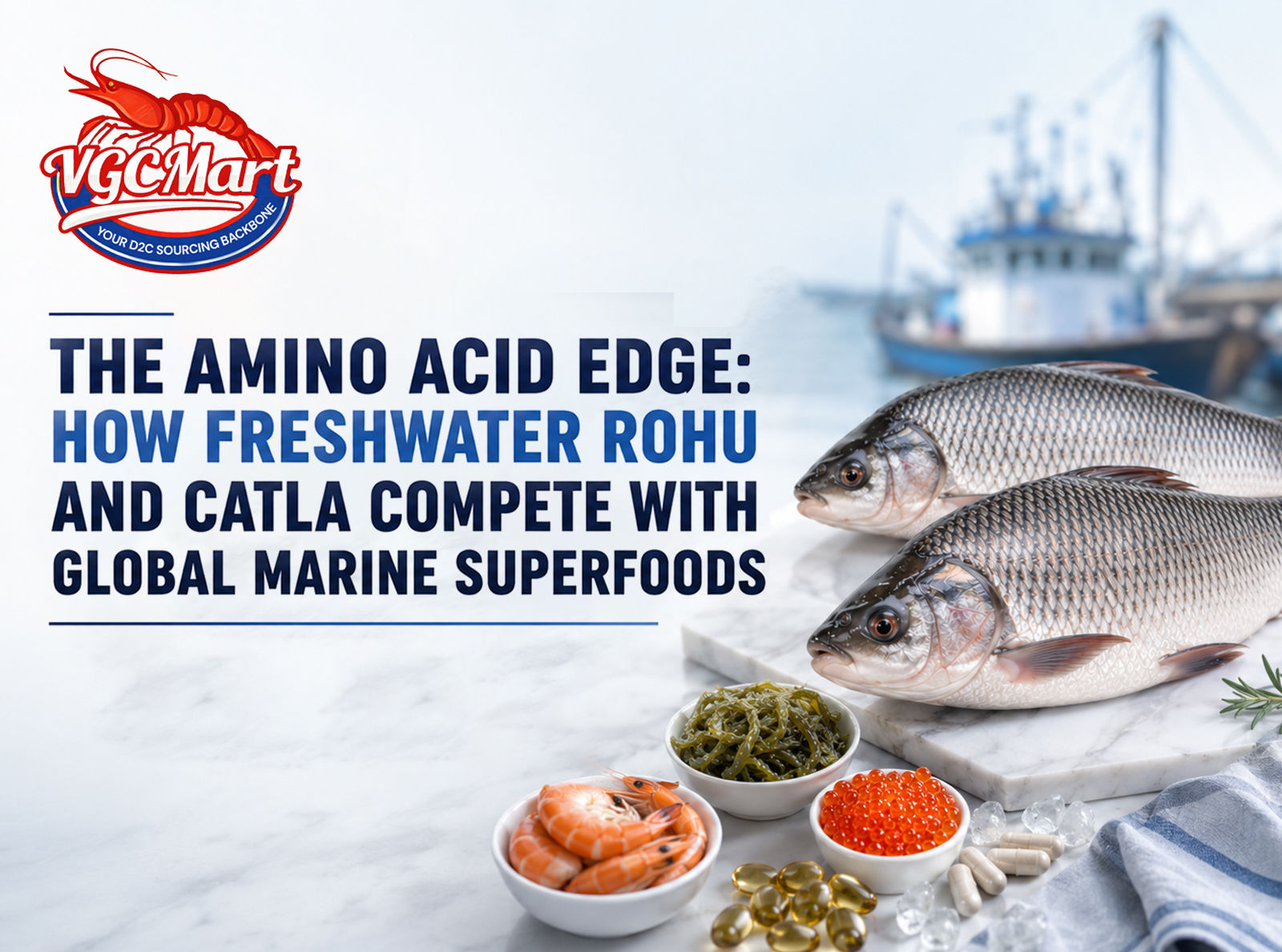
As explored in our article on Rohu and Catla protein comparisons with salmon, freshwater fish now compete surprisingly well on amino acid density while offering far greater procurement stability.
Seawater vs Freshwater Fish in B2B Procurement
| Factor | Seawater Fish | Freshwater Fish |
|---|---|---|
| Seasonal variation | High | Moderate |
| Migration dependency | Critical | Limited |
| Regulatory closures | Strict | More flexible |
| Omega-3 concentration | Higher | Moderate |
| Fat fluctuation | Significant | Stable |
| Price volatility | High | Lower |
| Supply chain complexity | Very high | Medium |
| Aquaculture support | Limited for many species | Widely available |
For procurement teams, this comparison is operationally critical.
Marine seafood often delivers superior peak-season nutrition and premium positioning - but freshwater fish deliver supply consistency and pricing predictability.
Cold Chain Pressure Is Much Higher for Marine Seafood
Marine fish typically travel through significantly longer and more fragile cold-chain networks.
Wild catches may involve:
- offshore storage
- vessel freezing
- long-haul transport
- export transit
- customs delays
- multiple redistribution points
Each additional step increases spoilage risk and quality degradation.
This is particularly important in categories like:
- fresh fish delivery India
- premium frozen seafood
- sashimi-grade seafood sourcing
- export-quality fish procurement
As discussed in our article on IoT-enabled cold chain seafood logistics, real-time temperature monitoring is becoming essential for maintaining nutritional integrity and freshness in marine seafood categories.
Seasonal Volatility Directly Impacts Seafood Unit Economics
Marine seasonality affects far more than availability.
It directly impacts:
- procurement pricing
- spoilage rates
- inventory planning
- working capital
- yield consistency
- gross margins
Sudden seasonal price spikes for pomfret, tuna, prawns, or salmon often create simultaneous sourcing and profitability challenges.
As explored in our article on seafood spoilage and unit economics in India, margin erosion in seafood businesses frequently originates from unstable procurement cycles combined with freshness loss.
AI Forecasting Is Becoming Essential for Seasonal Seafood Planning
Traditional seafood procurement models struggle to predict seasonal marine volatility accurately.
This is why advanced procurement teams increasingly use:
- landing pattern analysis
- weather data
- demand forecasting systems
- inventory trend modelling
- port activity monitoring
to anticipate supply fluctuations earlier.
As discussed in our article on AI demand forecasting in seafood sourcing, predictive procurement systems are becoming critical tools for reducing overpaying, overstocking, and reactive sourcing behavior.
Freshwater Fish Offer Strategic Stability for D2C Brands
For D2C seafood companies, stable product experience matters more than almost anything else.
Freshwater species provide several structural advantages:
- year-round availability
- lower price volatility
- predictable processing yields
- stable texture profiles
- easier cold-chain management
This makes them particularly valuable for:
- subscription seafood brands
- protein-focused meal kits
- institutional catering
- health-food manufacturing
- scalable frozen seafood lines
And as explored in our article on seafood quality standardization in India, predictable grading and sourcing discipline become easier when procurement systems rely on more stable species categories.
Seasonality Should Shape Product Strategy - Not Just Procurement
Many seafood businesses still treat seasonality as a supply-side inconvenience.
The strongest operators treat it as a strategic advantage.
Peak-season marine sourcing allows brands to:
- market superior nutritional quality
- improve flavour consistency
- optimize premium SKUs
- reduce off-season procurement inefficiencies
Meanwhile, freshwater species can anchor stable high-volume product lines.
The most resilient seafood businesses increasingly balance both.
Final Thoughts: Seasonality Is a Competitive Advantage When Understood Properly
Seafood is not a static commodity.
Biology shapes everything:
- pricing
- nutrition
- freshness
- texture
- sourcing windows
- profitability
Freshwater and marine species operate under fundamentally different seasonal dynamics.
Businesses that understand these differences build:
- better procurement calendars
- more stable margins
- stronger product consistency
- better nutritional positioning
- healthier long-term supply chains
Seasonality is not the enemy of seafood sourcing.
Poor sourcing intelligence is.
About VGC Mart
VGC Mart is a B2B seafood sourcing and supply chain company serving D2C brands, HoReCa groups, institutional buyers, cloud kitchens, and food manufacturers across India. We specialize in species-specific procurement planning, centralized seafood sourcing, cold-chain-compliant logistics, IQF seafood processing, and traceable supply-chain systems designed for scalable seafood businesses. Any business queries, please reach out contact us